


26 Jul 2026
Vapour Barrier vs Breathable Membrane: Which One Goes Where?
Use a vapour barrier (VCL) on the warm, internal side of insulation to keep moisture out of the structure, and a breathable membrane on the cold, external side to let any trapped moisture escape while blocking water. Getting them the wrong way round traps condensation inside the build-up.
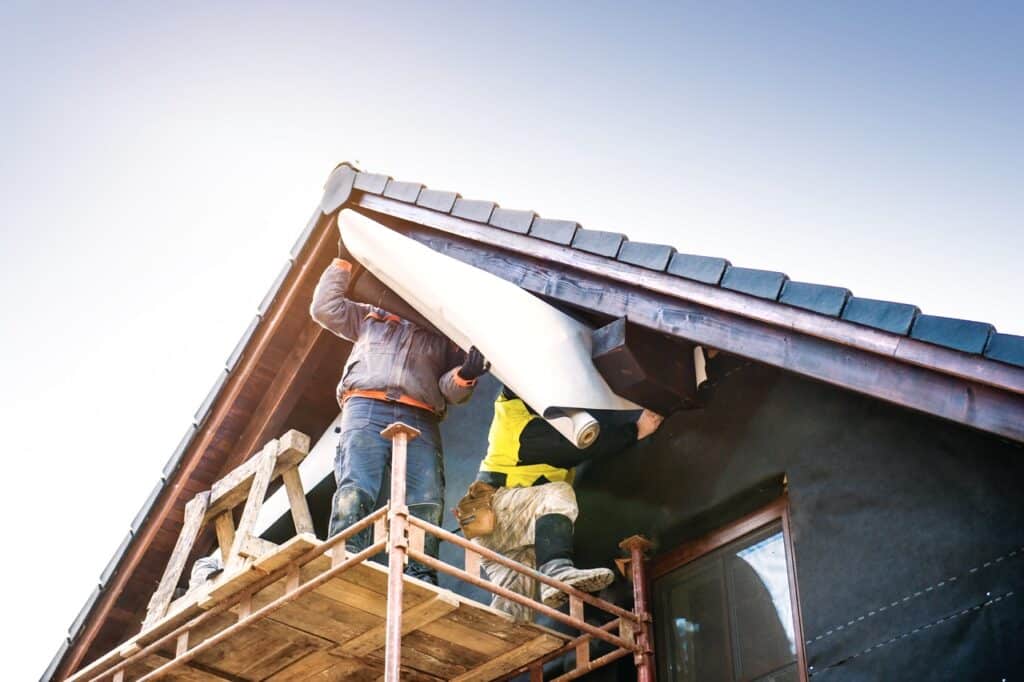
Vapour barrier vs breathable membrane: the one-line answer
They are not alternatives. They are two halves of the same system, and a properly built roof or wall usually has both.
| Vapour barrier / VCL | Breathable membrane | |
|---|---|---|
| Position | Warm side (inside) | Cold side (outside) |
| Purpose | Stop internal moisture entering the structure | Let trapped moisture escape, block rain and wind |
| Vapour permeability | Very low — resists vapour | High — vapour open |
| Water resistance | Yes | Yes |
| Typical material | Aluminium foil membrane, polythene | Spunbond polypropylene, 100–120 g/m² |
| Fitted | Behind plasterboard, taped at all laps | Over rafters or sheathing, lapped, under battens |
The logic is simple once you see it. Moisture inside the building wants to move outwards towards the cold. The vapour barrier stops most of it leaving the room in the first place. The breathable membrane gives whatever gets past a route out to the atmosphere. Seal both ends and moisture has nowhere to go; leave both open and you have no rain protection and no vapour control.
What a vapour barrier does (and where it goes)
A vapour barrier, or vapour control layer, is a high-resistance membrane fitted on the warm, internal side of the insulation — directly behind the plasterboard on walls and ceilings, or above the insulation and below the screed in a floor.
Its job is to stop the humid air generated by cooking, washing and simply living in a house from diffusing into the wall or roof build-up. If that moist air reaches the cold outer part of the construction it condenses, and the resulting water sits inside the insulation and against the timber, where it degrades thermal performance and eventually rots the frame.
In the UK the usual choice is an aluminium foil membrane. It controls vapour, improves airtightness once taped, and reflects radiant heat back into the room. The critical detail is continuity: all laps overlapped by at least 100mm and sealed with reinforced foil tape, the perimeter sealed at floor and ceiling, and every socket, downlight and pipe penetration detailed.
What a breathable membrane does (and where it goes)
A breathable roofing membrane goes on the cold, outer side — draped over the rafters (or laid over insulation in a fully supported build-up) and held by the tile battens, beneath the slates or tiles.
It works in two directions at once. From the outside, it stops wind-driven rain, snow and dust that gets past the tiles, forming a secondary weatherproofing barrier. From the inside, its microporous structure lets water vapour diffuse outwards, so any moisture that has entered the roof space can escape rather than accumulating.
Modern breathable membranes are three-layer products: an outer waterproof surface, a breathable waterproof middle layer, and an inner layer that resists abrasion and handling damage. They are supplied by grammage — 100 g/m² for standard domestic work, 115–120 g/m² for a heavier, more robust membrane on exposed sites or larger roofs — and quality products carry BBA approval.
Because a breathable membrane allows vapour out, it can often reduce or remove the need for additional high-level roof ventilation compared with a traditional non-breathable felt. That is one of the main reasons it has become the default on new UK roofs.
Do you need both?
In an insulated, heated element — yes, almost always. Here is how the two layers sit in the common UK build-ups.
| Build-up | Warm side | Cold side | Notes |
|---|---|---|---|
| Cold pitched roof (insulation at ceiling level) | VCL above ceiling plasterboard | Breathable membrane over rafters | Loft space ventilated; VCL stops moisture rising from rooms below |
| Warm pitched roof / room in roof | VCL under rafters, behind plasterboard | Breathable membrane over rafters | Both layers essential; VCL must be continuous |
| Timber-frame wall | Foil VCL on face of studs | Breather membrane over sheathing | Cavity and cladding outside the breather |
| Garden room / outbuilding | Foil VCL on internal face of frame | Breathable membrane under external cladding | Same principle at a smaller scale |
| Flat / warm deck roof | VCL below insulation | Waterproof covering above | Vapour control below the insulation is critical |
The exception is an uninsulated, unheated structure — an open carport, a simple store — where there is no warm side and therefore nothing to control. There you fit weather protection only.
Roof, wall and floor: which membrane where
A quick reference for the whole building envelope:
| Element | Inside layer | Outside layer |
|---|---|---|
| Pitched roof | Aluminium foil VCL under rafters | Breathable roofing membrane over rafters |
| Ceiling to cold loft | Foil VCL above plasterboard | Ventilated loft space |
| External wall (timber frame) | Foil VCL on studs | Breather membrane behind cladding |
| Internally insulated solid wall | Foil VCL behind plasterboard | Existing masonry (take advice on breathability) |
| Ground floor with UFH | Foil membrane above insulation | DPM below slab |
| Garden room / shed | Foil VCL inside frame | Breathable membrane under cladding and roof covering |
What happens if you fit the wrong one
The two most common errors have distinct and predictable outcomes.
Fitting a vapour barrier on the outside instead of a breathable membrane creates a sealed cold face. Any moisture that gets into the build-up — and some always will — cannot escape. It condenses against the inside of that impermeable layer and drips back into the insulation. The classic symptom is a roof where water appears to be leaking during cold weather but the tiles are sound: it isn’t a leak, it’s condensation running off the underside of a non-breathable underlay.
Fitting a breathable membrane on the inside instead of a vapour barrier leaves the warm side wide open. Humid room air passes straight into the insulation and condenses at the cold face. Because a breathable outer layer also lets some moisture out, this failure can smoulder for years — insulation slowly wetting, thermal performance dropping, timber staying damp — before anyone notices.
Both errors end the same way: wet insulation that no longer insulates, damp timber, mould growth, and remedial work that means stripping the finish to put it right.
Choosing the right product for your build
For the warm side, an aluminium foil vapour control membrane in 1m × 50m (50m²) or 1.5m × 50m (75m²), plus reinforced aluminium foil tape for every lap and edge.
For the cold side, a breathable roofing membrane. Our 1m × 50m 100 g/m² BBA-approved roll suits most domestic pitched roofs; the 1.5m × 50m 115 g/m² Eurovent roll gives a wider, heavier membrane that covers faster on larger roofs; and a 1m × 20m 120 g/m² roll works well for smaller jobs, extensions and outbuildings. Add felt support trays at the eaves to stop the membrane sagging and ponding water behind the fascia.
Buying both layers together makes sense — you need them at different stages of the same job, and bulk pricing applies across the order.
Frequently asked questions
Can you use a breathable membrane as a vapour barrier?
No. A breathable membrane is designed to let vapour through, which is the opposite of what a vapour barrier does. Using one on the warm side leaves the structure open to internal moisture.
Do I need a vapour barrier under a breathable membrane?
In an insulated, heated roof or wall, yes. The breathable membrane sits on the cold side over the rafters; the vapour barrier sits on the warm side behind the plasterboard. They are separated by the insulation, not fitted together.
Which side does breathable membrane face?
The printed or marked face goes outwards, away from the building. Check the roll — manufacturers print the orientation on the membrane, and fitting it inverted compromises performance.
Is foil membrane breathable?
No, and that is the point. Aluminium foil membrane is a vapour control layer designed to resist vapour movement. It belongs on the warm side of the insulation, with a breathable membrane on the cold side.
Can I use both on the same roof?
Yes — that is the correct build-up for any insulated roof. Foil VCL under the rafters behind the plasterboard, breathable membrane over the rafters under the battens.
Products mentioned in this guide
- 50m² Aluminium Foil VCL 1m × 50m
- 50m² Breathable Roofing Felt 1m × 50m 100 GSM BBA
- 75m² Eurovent Breathable Membrane 1.5m × 50m 115 GSM
- Reinforced Aluminium Foil Tape
Related guides
Related Articles

30 Jul 2026
Softwood Timber Sizes Explained: 3×2, 4×2, CLS & What They’re ForIn the UK, ‘4×2 timber’ means nominal 4×2 inch (roughly 100×50mm) softwood, though planed/CLS 4×2 finishes at about 89×38mm. ‘3×2’ is nominal 75×50mm (CLS ~63×38mm). CLS is planed with rounded edges for stud walls; C16 and C24 are strength grades for structural joists and rafters.
Read More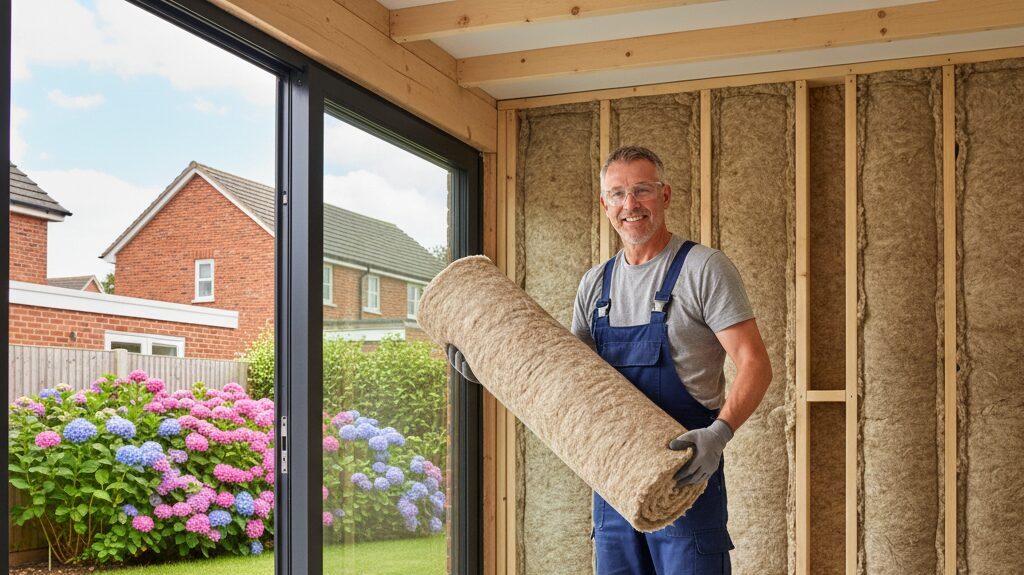
30 Jul 2026
Insulating a Garden Room, Shed or Van: The Breathable + Foil ApproachTo insulate a garden room, shed or van, fit a breathable membrane on the cold outer side, add bulk or foil insulation in the frame, then seal a vapour control layer (foil membrane) on the warm inner side with taped joints. This 'breathable outside, sealed inside' order prevents interstitial condensation.
Read More
29 Jul 2026
Damp Proof Membrane (DPM) Guide: 1200g, Sheet vs Liquid & How to InstallA damp proof membrane (DPM) is a polythene sheet — commonly 1200 gauge (300 micron) — laid under or over a concrete floor slab to stop ground moisture rising into the building. It's lapped at joints, sealed with tape and linked to the wall DPC to form a continuous barrier.
Read More