Blog

Latest Blogs & News from Trade Store

30 Jul 2026

Softwood Timber Sizes Explained: 3×2, 4×2, CLS & What They’re For

In the UK, ‘4×2 timber’ means nominal 4×2 inch (roughly 100×50mm) softwood, though planed/CLS 4×2 finishes at about 89×38mm. ‘3×2’ is nominal 75×50mm (CLS ~63×38mm). CLS is planed with rounded edges for stud walls; C16 and C24 are strength grades for structural joists and rafters.

Read More
30 Jul 2026

Insulating a Garden Room, Shed or Van: The Breathable + Foil Approach

To insulate a garden room, shed or van, fit a breathable membrane on the cold outer side, add bulk or foil insulation in the frame, then seal a vapour control layer (foil membrane) on the warm inner side with taped joints. This 'breathable outside, sealed inside' order prevents interstitial condensation.

Read More

29 Jul 2026

Damp Proof Membrane (DPM) Guide: 1200g, Sheet vs Liquid & How to Install

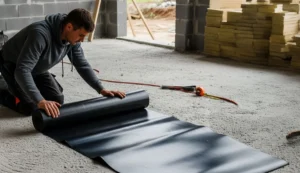
A damp proof membrane (DPM) is a polythene sheet — commonly 1200 gauge (300 micron) — laid under or over a concrete floor slab to stop ground moisture rising into the building. It's lapped at joints, sealed with tape and linked to the wall DPC to form a continuous barrier.

Read More

29 Jul 2026

How Much Does Lead Flashing Cost in the UK? (2026 Price Guide)

In the UK, lead flashing material typically costs around £8–£15 per metre for Code 4, depending on width and lead price at the time. Fitted, expect roughly £20–£45 per metre including labour, with a chimney re-flash commonly £250–£600 depending on access and complexity.

Read More

28 Jul 2026

How to Install Lead Flashing: Step-by-Step (Chimney, Wall & Pitched Roof)

To install lead flashing, cut Code 4 lead to size, chase a 25mm slot into the mortar joint, dress the lead over the roof surface with a bossing tool, wedge it into the chase with lead clips, and seal with lead sealant. Work in 1.5m lengths with 100mm overlaps to allow for thermal movement.

Read More

28 Jul 2026

Breathable Roofing Membrane vs Traditional Felt: A UK Buyer’s Guide

A breathable roofing membrane lets water vapour escape from the roof space while keeping rain out, reducing condensation and often removing the need for extra roof ventilation. Traditional bitumen felt is non-breathable, heavier and cheaper, but can trap moisture. Most new UK roofs now use breathable membranes to comply with BS 5250/5534.

Read More

27 Jul 2026

Roofing Felt Explained: Types, Uses & When to Replace It

Roofing felt is a water-resistant underlay fitted beneath tiles or slates (and as a covering on flat/shed roofs) to provide a secondary barrier against wind-driven rain. Modern roofs use lightweight breathable membranes; older bitumen '1F/1B' felt is heavier and non-breathable. Most felt lasts 20–30 years.

Read More

27 Jul 2026

Does Foil Insulation Actually Work? Foil vs Fibreglass vs PIR

Reflective foil insulation works by reflecting radiant heat rather than trapping air, so it performs best with an adjacent air gap and in reducing summer heat gain and radiant loss. For high U-value targets it's usually combined with, not a replacement for, bulk insulation like mineral wool or PIR.

Read More

26 Jul 2026

Vapour Barrier vs Breathable Membrane: Which One Goes Where?

Use a vapour barrier (VCL) on the warm, internal side of insulation to keep moisture out of the structure, and a breathable membrane on the cold, external side to let any trapped moisture escape while blocking water. Getting them the wrong way round traps condensation inside the build-up.

Read More
1 2 3 … 12